
Commercial Ice Machine Not Making Enough Ice? 6 Causes
When a commercial ice machine cannot keep up with demand, check these six common causes, learn what staff can safely inspect, and know when to call a technician.


A commercial ice machine may still make some ice while falling far behind a restaurant, bar, hotel, school, or healthcare facility’s daily demand. A half-full bin at opening, longer harvest cycles, thin or misshapen cubes, and production that drops during the busiest part of the day are all signs that the machine needs attention.
A machine that is “not making enough ice” has not always stopped completely. It may still complete cycles while falling too far behind your facility’s demand. Before assuming something has failed, confirm that production has actually dropped.
If your commercial ice machine is not making enough ice, start with the safe checks below. Do not remove energized panels, test live electrical components, handle refrigerant, or bypass a safety control. Those steps belong to a qualified commercial refrigeration technician.
First, Confirm That Ice Production Is Actually Low
Before troubleshooting, compare the machine’s recent output with its normal performance. Note when the bin was last emptied, whether demand has increased, and whether the machine runs continuously or stops with an error. Published production ratings are measured under specified water and air conditions; a hot kitchen or warmer incoming water can reduce real-world output.
- Check that the bin control is not blocked by ice, a scoop, or another object.
- Record any error code before switching the machine off.
- Look for water on the floor, unusual noise, or unusually long freeze and harvest cycles.
- Confirm that staff are not using more ice than the equipment and storage bin were selected to provide.
6 Reasons a Commercial Ice Machine Is Not Making Enough Ice
1. A Restricted Water Filter or Water Supply
A loaded filter, partially closed shutoff valve, kinked supply line, or facility-wide pressure issue can reduce the water available for each batch. Depending on the machine, the result may be small cubes, incomplete slabs, slow fills, or repeated low-water faults.
Safe staff check: Make sure the accessible shutoff valve is fully open, inspect the visible line for kinks, and check the filter-change date. Replace cartridges only with the type specified for the equipment and follow the manufacturer’s procedure.
Call a technician when: Water flow remains weak after a correct filter change, the inlet valve chatters or does not fill, or diagnosis requires opening the machine.
2. Scale, Slime, or Debris Is Interfering With the Freeze Cycle
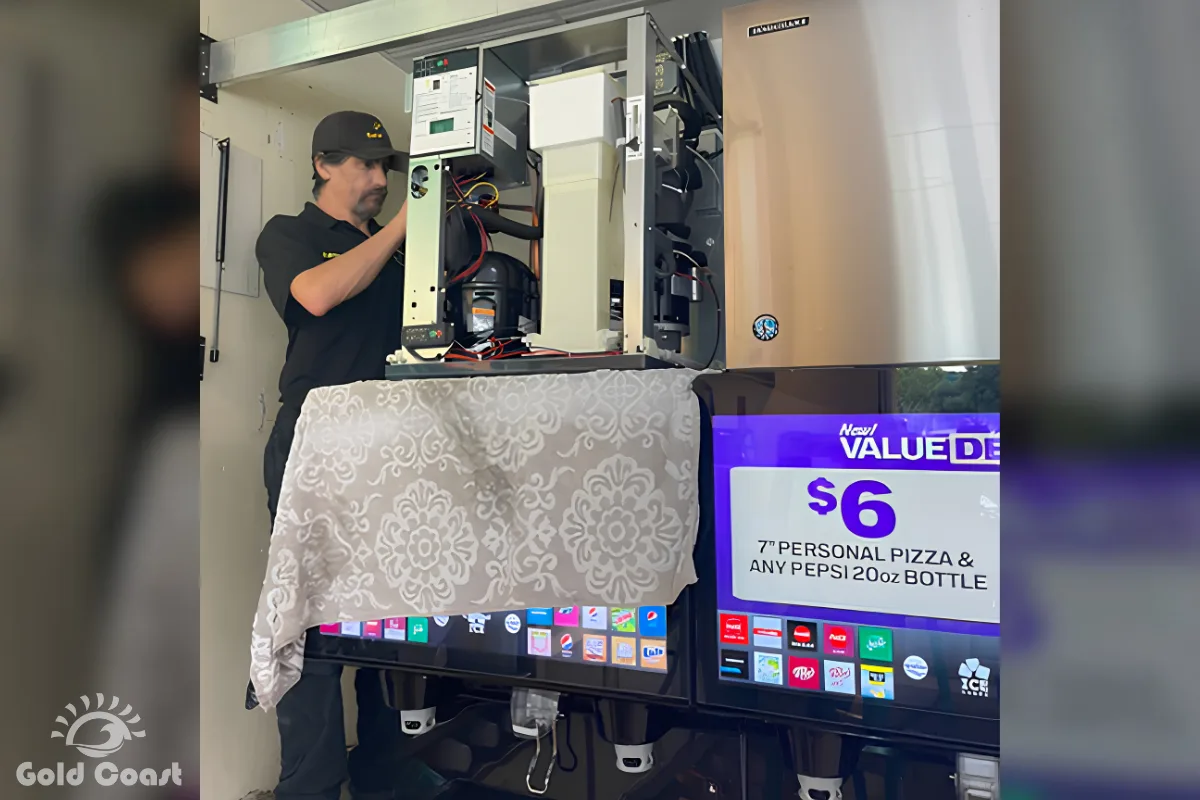
Mineral scale can restrict water passages and insulate the evaporator surface. Slime, mold, debris, and other buildup can also disrupt water distribution or interfere with sensors. Besides lowering output, contamination may affect ice quality and sanitation.
Safe staff check: Inspect only the customer-accessible areas identified in the operator manual. If the water curtain, trough, or visible surfaces show buildup, take the condition seriously rather than scraping components with tools.
Call a technician when: Buildup returns quickly, internal parts need disassembly, or the machine requires deliming and sanitizing beyond the staff procedure. Our commercial ice machine cleaning service covers the internal areas routine wiping cannot reach. Scotsman operators can also review our Scotsman ice machine cleaning guide while still following their exact model manual.
3. Poor Airflow or Excessive Room Heat
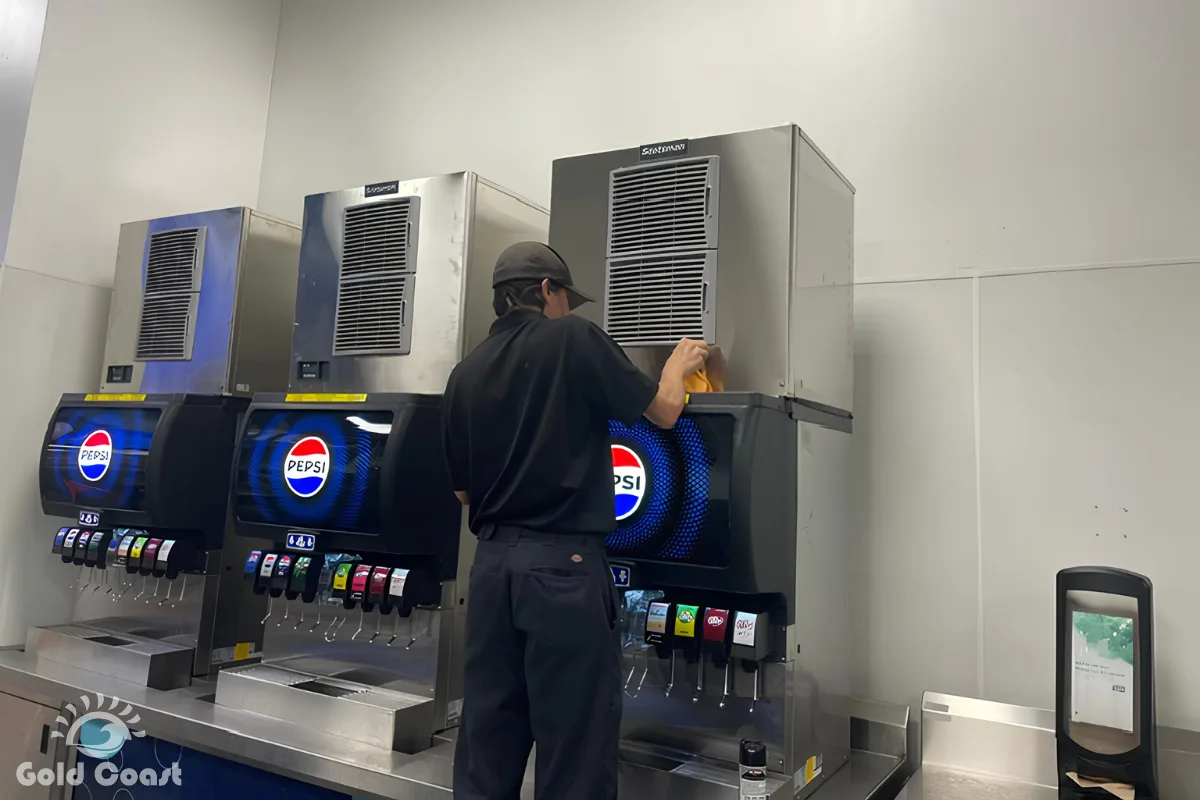
Air-cooled machines need clear ventilation to reject heat. Grease, dust, stored boxes, or a machine pushed too close to a wall can restrict airflow. Production can also fall when kitchen temperatures climb or when hot equipment exhausts toward the condenser.
Safe staff check: Remove items blocking the manufacturer-required clearance, make sure louvers are unobstructed, and verify that nearby equipment is not blowing hot air toward the machine. Clean only an accessible, removable air filter as directed in the manual.
Call a technician when: The condenser needs internal cleaning, the fan is not operating normally, the machine trips on a high-temperature fault, or output falls even with adequate clearance.
4. The Machine Cannot Release Ice Normally
An ice machine can freeze a batch but lose production time when that ice does not release into the bin promptly. Scale on the evaporator, water-distribution problems, a harvest control fault, or a refrigeration issue may cause long harvests, freeze-ups, or sheets of ice that remain attached.
Safe staff check: Record what the machine is doing and any displayed code. If the manual permits a normal power reset, perform it once after recording the code. Never chip ice from the evaporator or force moving parts.
Call a technician when: Ice repeatedly sticks, the machine freezes into a solid mass, or a reset does not restore normal cycles.
5. A Sensor, Control, or Water Inlet Component Is Failing
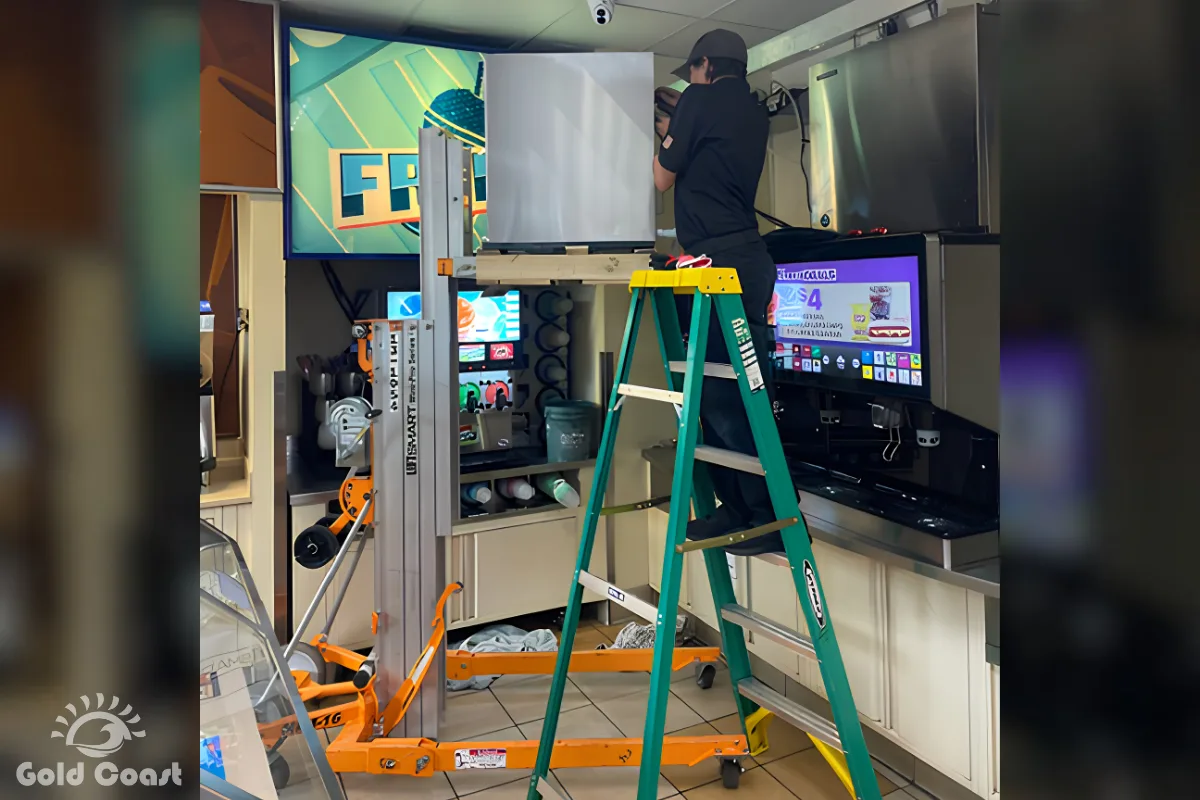
Depending on the model, components such as float switches, thermistors, bin controls, water-level sensors, inlet valves, and control boards help sequence each cycle. A failing or contaminated component can stop a cycle early, delay the next one, or make the machine behave intermittently.
Safe staff check: Keep the bin control’s accessible area clear, write down error codes, and confirm the machine has power and water. Do not bypass a control or use a multimeter inside energized equipment.
Call a technician when: Errors return, cycles stop unpredictably, or testing requires removing panels. A technician can determine whether the component itself has failed or whether another issue—such as scale, wiring, or poor water flow—is causing the problem.
6. The Refrigeration System Is Not Removing Enough Heat
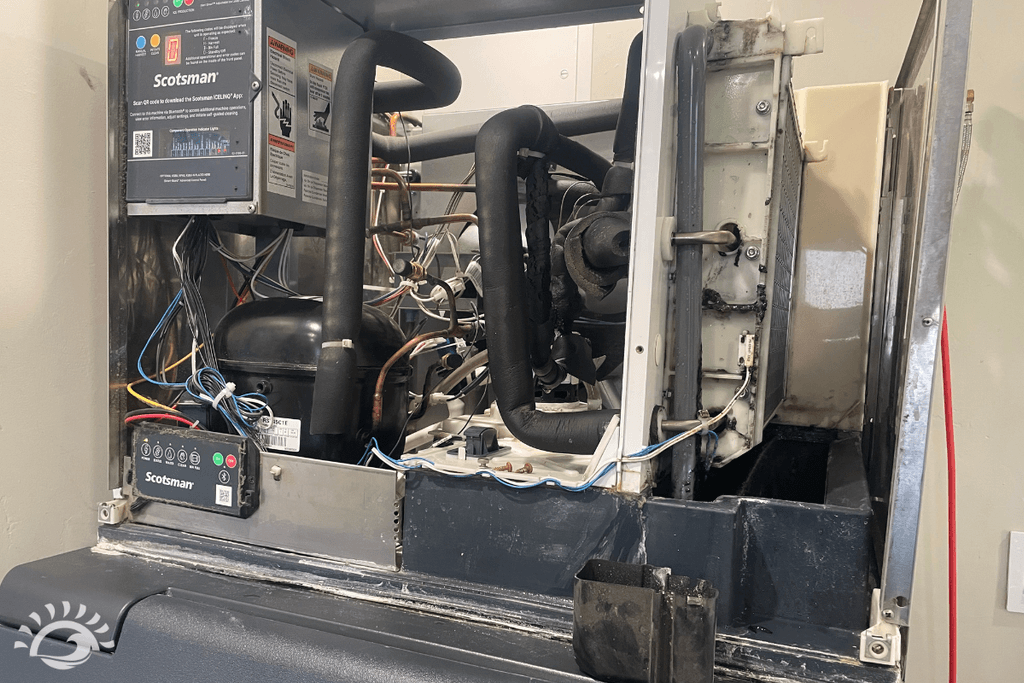
Problems with the condenser, fan, compressor, or refrigeration system can make each freeze cycle take longer, reducing how much ice the machine produces each day. The machine may run for long periods while producing less ice.
Safe staff check: Listen for a change in operating sound, check for a visible fault code, and confirm that ventilation is clear. Then leave sealed-system diagnosis to a professional.
Call a technician when: The unit runs continuously, the discharge air seems unusually hot compared with normal operation, the machine repeatedly shuts down, or production remains slow after basic water and airflow checks. Our commercial ice machine repair team can test the complete cycle and identify the underlying fault.
Quick Checklist Before Scheduling Service
Use this recap to work through the safe checks before you call:
- Confirm the machine has power and the water shutoff is open.
- Photograph the display and record any error code before resetting anything.
- Check the visible supply line for a kink or leak.
- Check the filter date and use the specified replacement if it is due.
- Clear stored items from ventilation openings and required equipment clearances.
- Inspect the bin control area for an obvious obstruction without removing panels.
- Note cube shape, cycle timing, room conditions, and when output started to drop.
Stop using the machine and arrange service if there is a burning smell, damaged wiring, repeated breaker trip, significant water leak, grinding noise, or suspected contamination. Follow your facility’s food-safety procedures for any ice that may be affected.
Prevent Low Ice Production With Planned Maintenance
Routine maintenance helps a commercial machine operate consistently and gives a technician a chance to find developing problems before peak demand exposes them. The correct frequency depends on the manufacturer, model, water quality, environment, and usage. Follow the equipment manual and local sanitation requirements rather than relying on one schedule for every machine.
A practical plan includes filter replacement, cleaning and sanitizing, condenser and airflow inspection, water-distribution checks, and a review of freeze and harvest performance. For more detail, see how often a commercial ice machine should be cleaned.
Commercial Ice Machine Low-Production FAQs
Why is my commercial ice machine running but making very little ice?
Long freeze cycles often point to restricted water flow, scale, poor airflow, high ambient heat, or a refrigeration problem. Note the cycle behavior and error codes, complete only the safe checks above, and schedule service if output does not recover.
Can hot weather reduce commercial ice production?
Yes. Higher room temperature and warmer incoming water can increase the time needed for each batch. Blocked ventilation or nearby cooking equipment can make the effect worse.
Should staff reset an ice machine that is not keeping up?
Only if the manufacturer’s operator instructions allow a normal reset. Record the error first and reset it once. Repeatedly resetting a machine can hide useful diagnostic information without correcting the cause.
When should I call for commercial ice machine repair?
Call when low output continues after basic water, filter, bin-control, and airflow checks; when errors return; or when there is a leak, unusual noise, freeze-up, electrical concern, or suspected refrigeration fault.
Get Your Commercial Ice Production Back on Schedule
A machine that still makes some ice can be easy to ignore until the bin runs empty during service. If your commercial ice machine is not making enough ice after the safe checks above, Gold Coast Refrigeration Service can diagnose water, airflow, control, harvest, and refrigeration problems and explain the recommended repair. Request commercial ice machine service before low production becomes an operational interruption.
Jason Fletcher
Jason is the owner of Gold Coast Refrigeration Service, which he started in 2016. Before refrigeration, he worked as a civil engineer and as a high school math and science teacher. He completed a formal program in Appliance Service Technology and Refrigeration and works hands-on across every brand and unit type the team services.
Done reading? Let our team handle it.
Same-week appointments across Brentwood, Antioch, Oakley, Walnut Creek, and the surrounding East Bay.