
Top 6 Reasons Your Walk-In Refrigerator Is Not Cold Enough
When a walk-in cannot reach temperature, inventory is on the clock. Use this checklist to diagnose airflow, seals, refrigerant, and controls before you lose product.


When your walk-in refrigerator is not cold enough, it can quickly put your business, inventory, and food safety at risk. Whether you’re running a restaurant, school district, healthcare facility, or grocery store, prompt action is critical. Below, we provide actionable steps you can take immediately, followed by real-world examples for those who want to dive deeper into specific repair scenarios.
What Should You Do If Your Walk-In Refrigerator Is Not Cold Enough?
A walk-in refrigerator not cold enough can quickly become a serious issue for any business that depends on reliable cold storage. Fluctuating temperatures, frequent alarms, or product spoilage are often the first warning signs that your system may be experiencing a malfunction. Identifying the issue early can often prevent bigger problems and costly repairs.
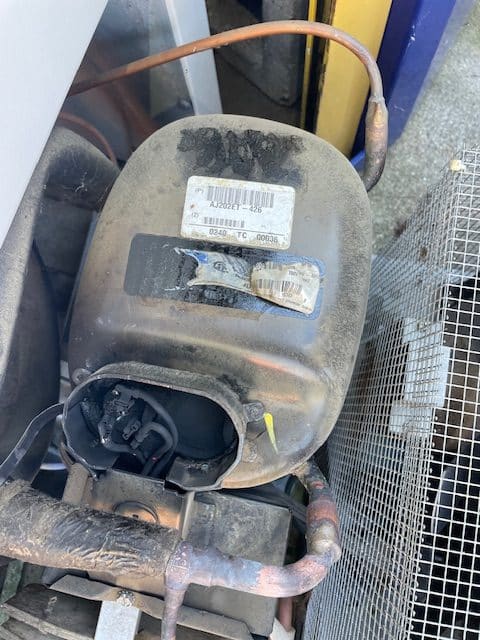
Here are the steps to take immediately after discovering your walk-in isn’t cooling.
- Call a qualified commercial refrigeration technician immediately. These systems are complex and require specialized equipment and expertise.
- Limit product loading: Avoid adding warm products while system performance is questionable.
- Monitor temperatures closely: Keep logs to track if temperatures continue to climb or stabilize.
- Don’t attempt DIY repairs: Refrigerant handling requires proper certification and tools.
What Causes a Walk-In Refrigerator Not to Be Cold Enough?
Based on years of experience, here are the 6 most common causes when a walk-in cooler isn’t cold enough:
- Restricted filter drier: Prevents refrigerant from circulating properly.
- Refrigerant leaks: Even small leaks reduce system capacity.
- TXV (Thermostatic Expansion Valve) problems: Controls refrigerant flow into the evaporator. A faulty TXV leads to improper cooling.
- Stuck head pressure control valves: Can stop refrigerant flow altogether.
- Electrical component failures: Sensors, solenoids, or controllers may fail.
- Dirty or blocked coils: Reduce system efficiency and cooling capacity.
If your walk-in refrigerator is not cold enough, any of these issues could be the underlying cause, and immediate attention is critical.
Real-World Example #1: Filter Drier Restriction Causing Cooling Issues
The Situation: A senior care facility’s walk-in freezer was fluctuating between 40°F and 50°F, triggering high-temp alarms.
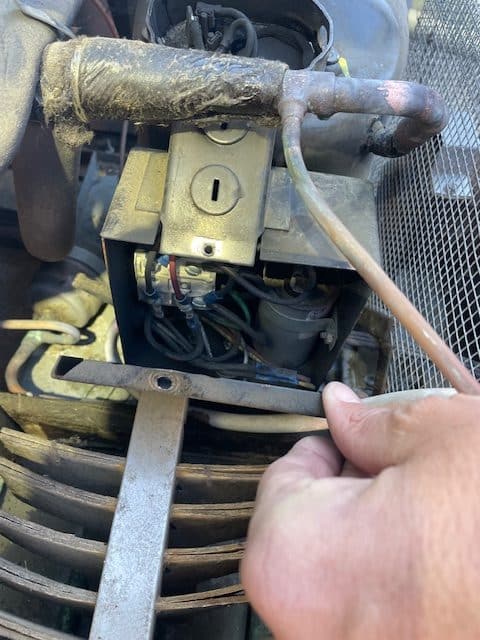
The Diagnosis:
- Suction pressure at 10 psi (very low)
- Liquid line pressure at 85 psi (low)
- Receiver pressure at 210 psi
- Liquid line cold and sweating, indicating restricted refrigerant flow.
In this case, the problem was a clogged filter drier restricting refrigerant flow, preventing the system from maintaining proper temperatures.
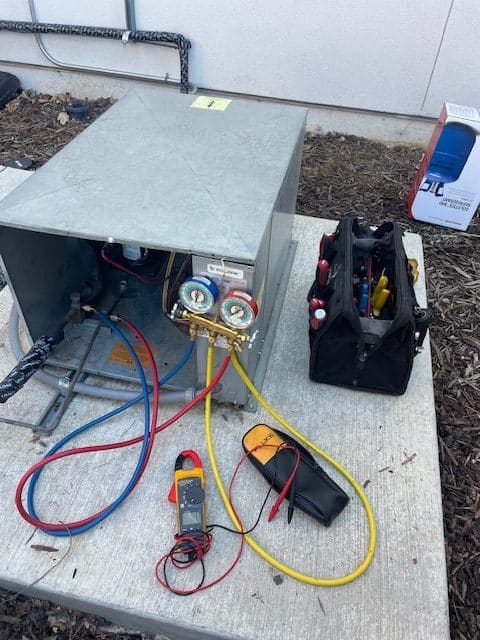
The Repair Process:
- Safely recovered the refrigerant.
- Removed and replaced the restricted filter drier.
- Brazed all joints and verified leak-free connections using nitrogen pressure testing.
- Pulled a deep vacuum to remove moisture and non-condensables.
- Recharged the system with the proper amount of refrigerant (7.5 lbs of R448A).
- Monitored pressures and performance:
- Suction pressure stabilized at 55 psi
- High pressure at 300 psi
- Superheat around 45°F
- Condenser temp around 108°F
- Unit returned to 39°F and entered its defrost cycle properly.
Real-World Example #2: Leaks, TXV Repairs, and a Stuck Head Pressure Control Valve
The Situation: A school district’s fresh food warehouse walk-in cooler was struggling to maintain temperature.
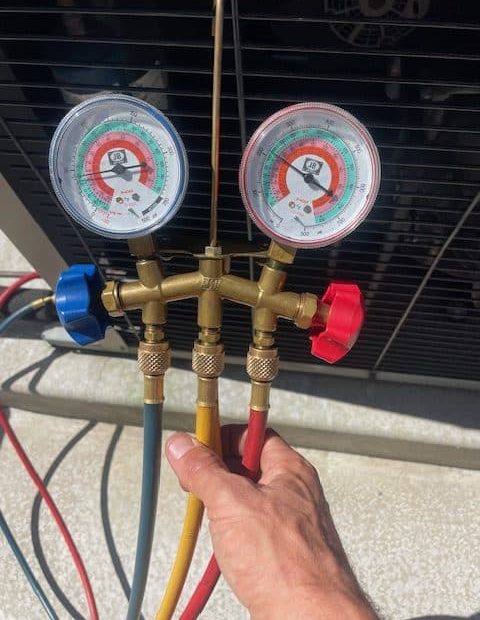
The Diagnosis:
- Small leak found at distributor and TXV valve stem.
- TXV adjustment temporarily stopped the leak but posed future risk.
- Head pressure control valve was sticking, preventing proper refrigerant flow.
The Repair Process:
- Recovered approximately 16 lbs of refrigerant.
- Replaced distributor and TXV assembly, brazing new components carefully.
- Pressure tested the entire system to 300 psi using nitrogen.
- Pulled a deep vacuum to ensure no moisture remained.
- Carefully recharged system multiple times while troubleshooting a stuck head pressure control valve.
- Once the valve opened, refrigerant began to flow normally, and the evaporator frosted properly.
- Final charge of 22 lbs of R404A restored proper operation with pressures holding at:
- Suction pressure 55 psi
- High pressure 150 psi
- 15°F superheat
- Evaporator outlet temperature at 35°F.
Bottom Line: What you need to know about a walk-in refrigerator not working:
When your walk-in refrigerator is not cold enough, it’s rarely a simple fix. Modern commercial refrigeration systems are highly technical and require detailed troubleshooting to get to the root cause. These real-life examples show that a thorough diagnosis and proper walk in refrigerator repair can get your walk-in back to peak performance, protect your inventory, and keep your operation running smoothly.
If you’re experiencing problems with your walk-in refrigerator not being cold enough, contact Gold Coast Refrigeration Service. Our expert technicians are trained to diagnose and repair all commercial refrigeration system makes and models—whether you’re running a restaurant, hospital, school, warehouse, or grocery store.
Jason Fletcher
Jason is the owner of Gold Coast Refrigeration Service, which he started in 2016. Before refrigeration, he worked as a civil engineer and as a high school math and science teacher. He completed a formal program in Appliance Service Technology and Refrigeration and works hands-on across every brand and unit type the team services.

Done reading? Let our team handle it.
Same-week appointments across Brentwood, Antioch, Oakley, Walnut Creek, and the surrounding East Bay.